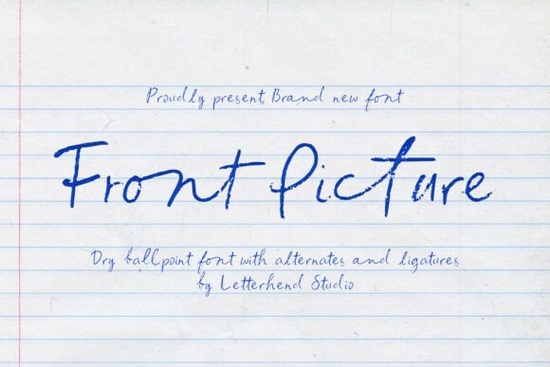
If you're looking for a handwritten font that feels like it was just jotted down during a coffee break slightly imperfect, warmly human, and full of quiet personality you’ll appreciate Front Picture Font. It’s not polished or overly stylized. Instead, it mimics the natural rhythm of quick notes: uneven pressure, dry-ballpoint texture, and strokes that breathe like real handwriting. That makes it especially useful for designers and crafters who want authenticity without sacrificing readability or for print-on-demand sellers building greeting cards, journal covers, or small-batch stationery with genuine charm.
When does Front Picture Font work best?
This font shines where warmth and approachability matter more than formality. Think hand-lettered quotes on printable wall art, subtle captions in digital planners, or product labels for artisanal goods like candles, soaps, or baked treats. Its slight roughness adds tactility even on screen so it pairs well with soft textures, neutral palettes, or minimal layouts. Unlike tightly spaced script fonts, Front Picture keeps generous letter spacing by default, which helps maintain legibility at smaller sizes (like 14–16pt for body text in Canva or Illustrator).
It’s also versatile enough to mix with cleaner sans-serifs or gentle serifs. Try pairing it with Montserrat for modern contrast, or with Playfair Display for a soft editorial feel. Since it includes standard OpenType features like ligatures and alternate characters, you can add subtle variation without switching fonts ideal when you’re designing multiple versions of the same layout (e.g., holiday cards with different names).
How is it different from other casual script fonts?
Many handwritten fonts lean into either extreme polish (think calligraphic flourishes) or exaggerated looseness (wobbly, hard-to-read letterforms). Front Picture Font sits comfortably in the middle. It avoids forced “quirkiness” no random swashes or over-the-top connectors and doesn’t require manual kerning adjustments to look balanced. That saves time for small business owners managing their own branding, or hobbyists learning design tools like Cricut Design Space or Silhouette Studio.
You’ll notice its consistency comes from intentional imperfection: baseline shifts are subtle, not jarring; stroke weight varies gently, not abruptly; and lowercase letters like “a,” “g,” and “s” retain familiar shapes rather than abstract reinterpretations. That familiarity helps readers process text faster especially important for product tags, packaging copy, or social media graphics meant to be scanned quickly.
What else fits well with this style?
If you like the relaxed, notebook-inspired vibe of Front Picture Font, you might also enjoy Roselya Script, which brings a delicate, flowing elegance perfect for wedding invites or boutique branding. For playful energy, Barbie Font offers clean, bouncy curves ideal for kids’ products or bright seasonal designs. If your projects lean toward joyful, inclusive messaging like family-themed prints or wellness journals Happy Rainbow Family Font adds cheerful color-ready lettering. For coastal or summer-themed crafts, Beach Waves Duo gives you coordinated script + sans options in one pack. And if hearts, soft lines, and gentle romance are part of your aesthetic, Madelyn Heart Font blends script with subtle heart accents great for gift tags or love notes.
For comparison, you can see how Front Picture Font stands out among other casual script fonts on Creative Fabrica especially in its balance of realism and usability.
A few practical tips before you use it
- Test legibility early: Try it in context not just as a headline, but as a short sentence in your intended size and background color.
- Check language support: This font covers basic Latin characters (A–Z, a–z, numerals, common punctuation), but doesn’t include extended diacritics or Cyrillic/Greek glyphs.
- Use vector exports for cutting machines: When using with Cricut or Silhouette, convert text to outlines first to preserve stroke integrity.
- Pair thoughtfully: Avoid stacking multiple script fonts. One expressive font (like Front Picture) plus one neutral supporting font is usually enough.
Finally, remember: great typography isn’t about choosing the most decorative option it’s about matching tone, audience, and purpose. If your goal is to make something feel personal, thoughtful, and quietly confident, Front Picture Font is a straightforward, reliable choice not flashy, but consistently effective.
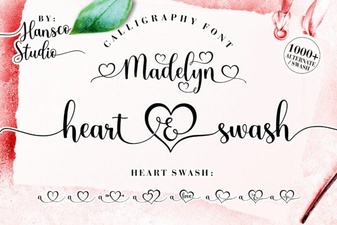 Madelyn Heart Font: Crafting Projects & Design Ideas
 Beautiful & Creative Fonts for Your Designs
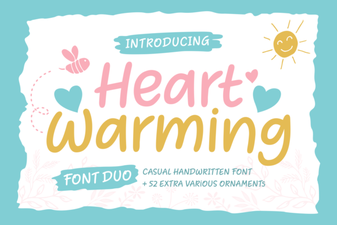 Heartwarming Fonts for Personal Projects & Design
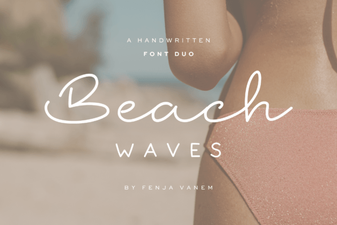 Beach Waves Duo: Free Font Pairing Ideas
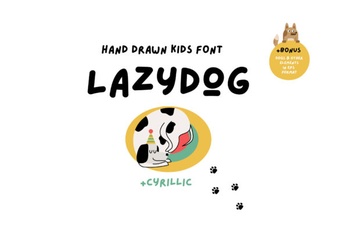 Lazydog Font: Freehand Script for Creative Projects
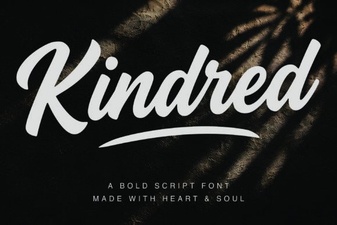 Kindred Font: Free Download & Creative Uses